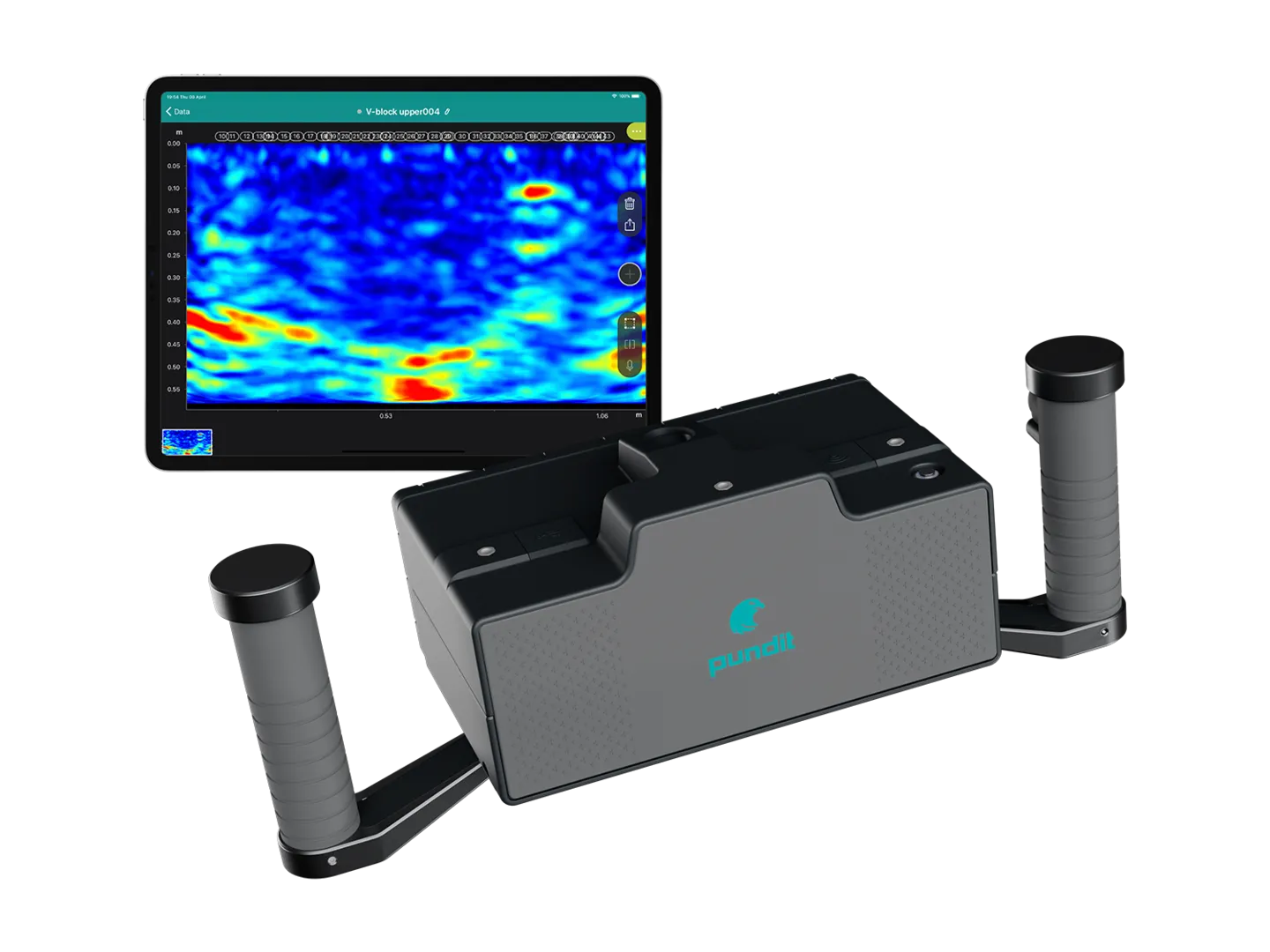

RAAC Integrity Monitoring & Diagnostics
Identify failing aerated concrete panels before catastrophic “sudden drop” collapse.
You cannot manage Reinforced Autoclaved Aerated Concrete (RAAC) by just looking at it. Because of its highly porous nature, moisture silently destroys the internal steel reinforcement, leading to sudden structural failure with zero visual warning. We use advanced, non-destructive diagnostics to map the internal integrity of your RAAC panels, giving you the exact data needed to secure your building.
Installed heavily between the 1950s and 1990s, RAAC has outlived its intended 30-year lifespan. The primary danger isn’t just the weak concrete; it is how the panels were manufactured.
The Core Threats
- Short Bearing Ends: The transverse rebar often stops short of the support beam, leaving the weakest part of the aerated concrete to carry the entire load.
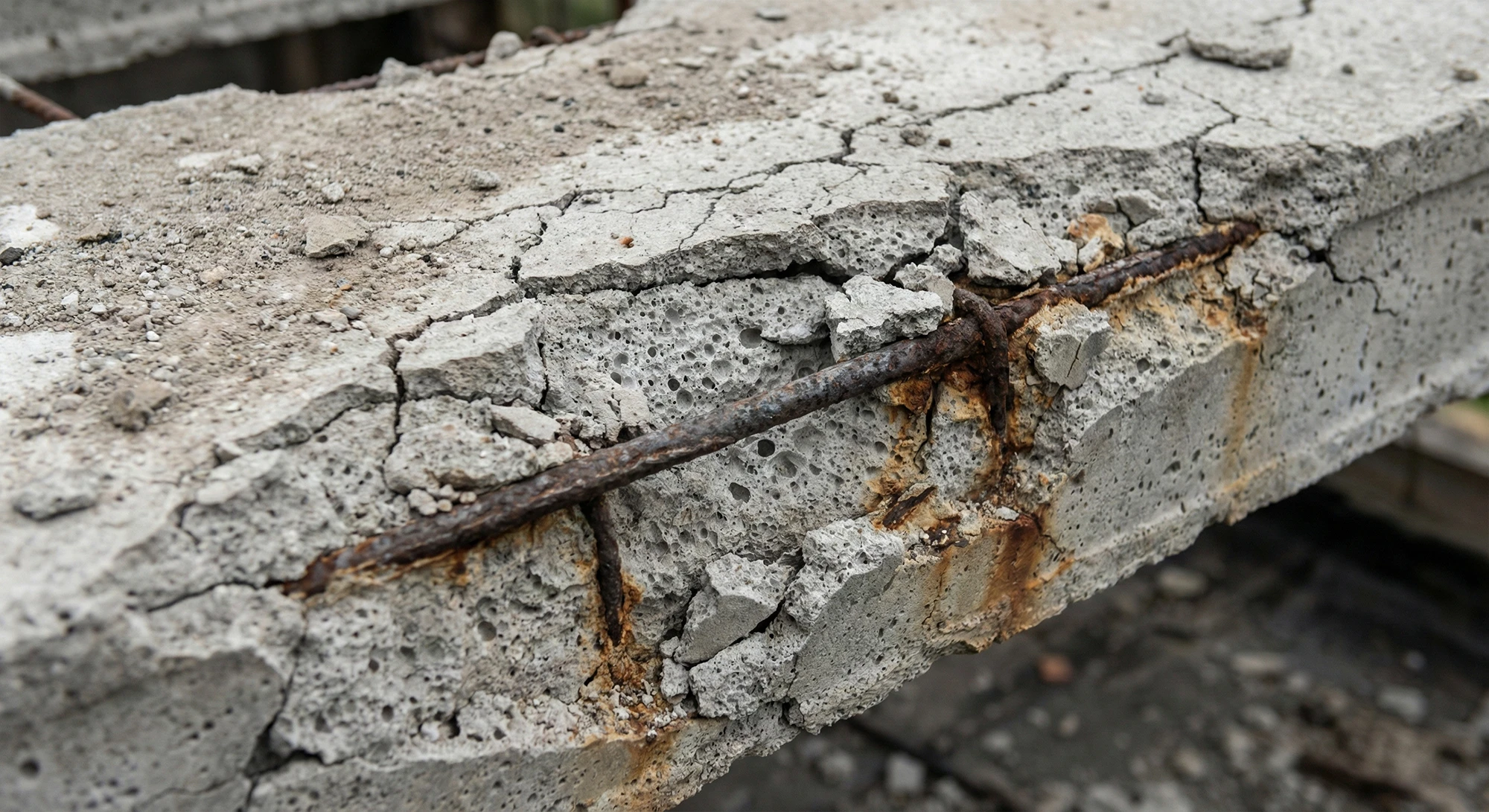
- Moisture Ingress: A leaking flat roof turns RAAC into a sponge, triggering rapid, aggressive corrosion of the internal steel.
- Zero Warning Signs: RAAC panels rarely sag or spall before failing. A painted ceiling can look perfectly structurally sound the day before it collapses.
Commission a RAAC Investigation
Do not leave the safety of your public or commercial estate to chance. Speak to our engineering team today to arrange a rapid, non-destructive RAAC identification survey.